Ready to bring your vision to life? Contact us today for a free quote and let's get started!
Consult with Expert
Repainting interior walls is one of the simplest ways to refresh a home, apartment, villa, or rental property. Over time, walls can develop stains, faded colours, small cracks, peeling paint, and marks from everyday use. In Dubai, heat, humidity, dust, moisture, and frequent air conditioning can also affect the condition of interior surfaces. Repainting interior walls in Dubai is not only about applying a new colour. Proper preparation, suitable materials, and careful application are important for achieving a clean and long-lasting finish. Whether you are updating one room or refreshing an entire property, the right approach can make a major difference.
Dubai interiors can experience conditions that gradually affect painted surfaces. Although walls are protected from direct outdoor weather in most homes, indoor humidity, moisture, dust, temperature changes, and regular AC use can still contribute to paint deterioration.
Some common factors include:
Regular repainting helps maintain a clean appearance while allowing property owners to identify surface problems before they become more difficult to repair.
Not every wall needs a complete repaint simply because the colour looks slightly older. However, certain signs indicate that it may be time to consider professional interior painting services Dubai residents can rely on.
Look for:
Sunlight entering through windows, cleaning, dust, and age can gradually change the appearance of interior paint. A faded wall can make an otherwise attractive room look tired.
Small cracks and peeling areas should not simply be covered with another coat of paint. Loose paint needs to be removed and the surface repaired before repainting.
Kitchen stains, water marks, fingerprints, smoke residue, and other marks can become difficult to clean. Repainting can restore a fresh and uniform appearance after the underlying problem has been addressed.
If a wall has been repaired several times, you may notice different shades or patches. A complete repaint can create a more consistent finish.
Bumps, holes, flaking areas, and damaged plaster can remain visible even after new paint is applied. Proper wall surface preparation is needed to achieve a smooth result.
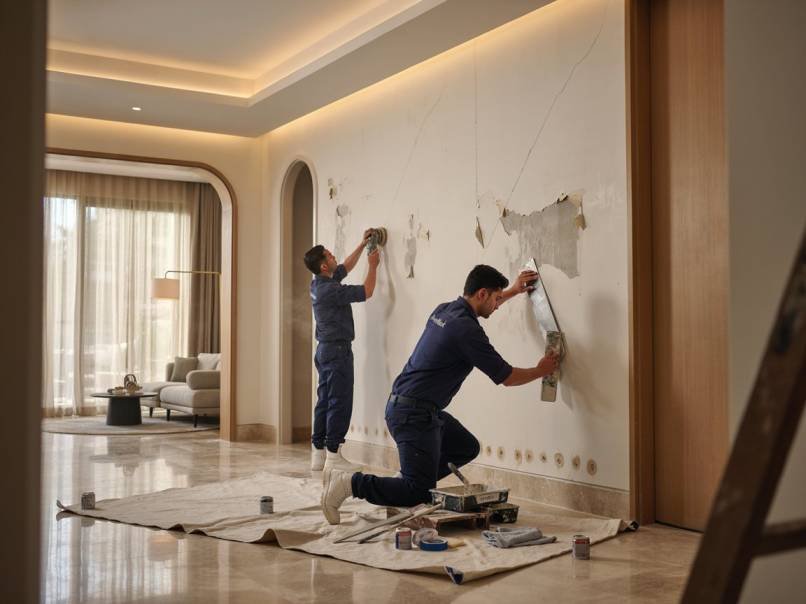
This is one of the most important questions homeowners should ask before starting a repainting project. In some situations, painting over the existing finish is perfectly reasonable. In others, the old paint needs to be removed first.
Old paint may need to be removed when it is:
Simply covering damaged paint may make the wall look better temporarily, but the new coating can eventually peel along with the weak layer underneath.
This is why paint removal and repainting should be treated as one complete process when the existing coating is badly damaged. For walls with significant peeling or coating failure, consider linking this section to PaintWork’s Paint Removal and Repainting Services page.
For walls that are in reasonable condition, professional painters may clean, sand, repair and prime the existing surface instead of removing all the old paint. The correct approach depends on the condition and type of the existing coating.
A professional repainting project should follow a clear process. Skipping preparation may save time at first, but it can reduce the quality and lifespan of the finished paint.
The first step is a detailed inspection. Painters should look for peeling paint, cracks, holes, stains, moisture damage, mould, uneven areas, and previous repairs.
If moisture or leakage is causing the damage, that issue should be addressed before repainting. Painting over an active moisture problem will not solve the underlying cause.
Furniture should be moved away from the walls where possible. Floors, fixtures, switches, sockets, doors, and other areas that should not receive paint need suitable protection.
Good preparation also makes the painting process cleaner and reduces the risk of accidental paint marks.
Dust, dirt, grease, and other contaminants can affect paint adhesion. Walls should be cleaned according to their condition before further preparation begins.
This step is particularly useful in busy homes, kitchens, rental properties, and areas where dust has collected over time.
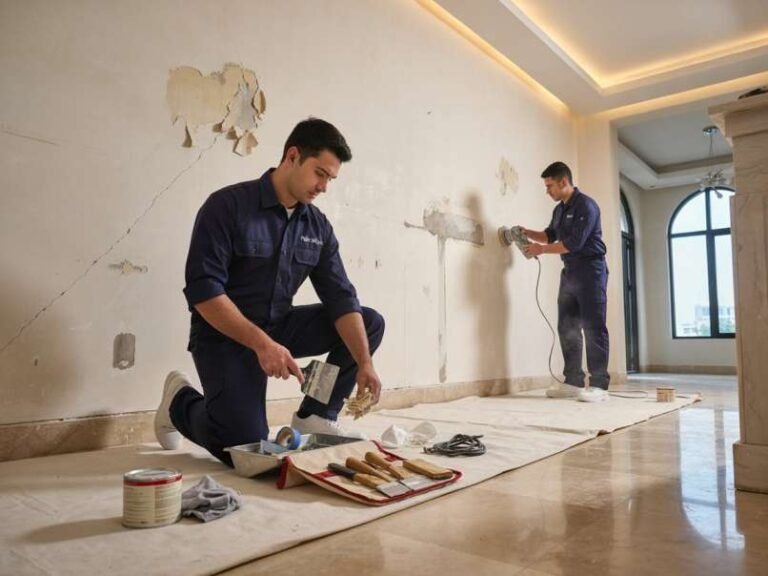
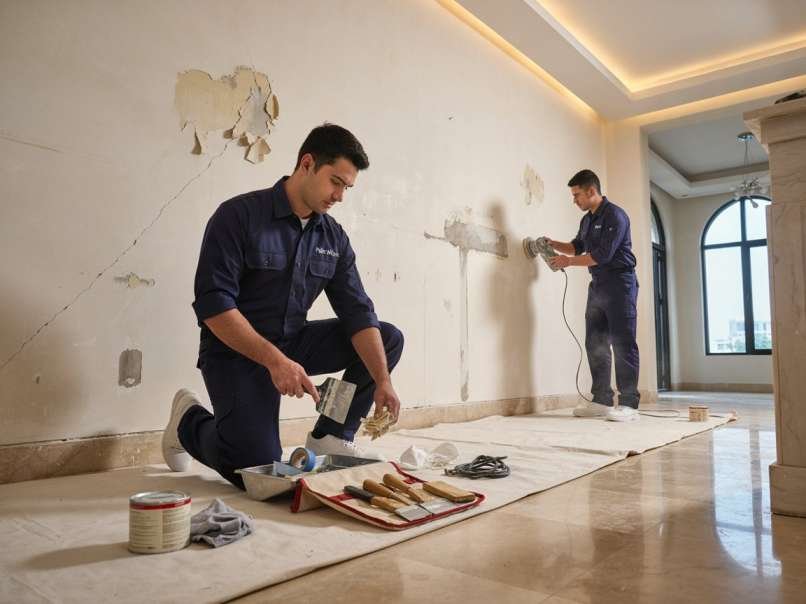
Any loose, flaking, or poorly bonded paint should be scraped away. Depending on the condition of the wall, sanding may also be required to smooth the edges between old and prepared areas.
If large sections of paint are failing, more extensive paint removal may be necessary.
Small cracks, nail holes, dents, and damaged sections should be filled and repaired. Once the repair material has dried, the area should be sanded to create a smooth transition.
This stage is essential because fresh paint can make surface imperfections more noticeable rather than hiding them.
Sanding helps create a more suitable surface for the next coating. It can remove rough areas and improve the consistency of repaired sections.
Professional wall surface preparation is one of the main factors behind a smooth-looking final finish.
Primer is not always required in exactly the same way for every wall, but it can be important for repaired, porous, stained, or heavily prepared surfaces.
A suitable primer and paint system can help improve adhesion, provide more uniform coverage, and reduce differences between repaired and existing areas.
After preparation and priming, the selected interior paint is applied. Depending on the product and colour, more than one coat may be needed.
Painters should allow appropriate drying time between coats rather than rushing the process.
A wall can feel dry on the surface while the coating is still curing. Good ventilation and suitable indoor conditions can help the paint dry properly.
Avoid placing furniture directly against freshly painted walls until the recommended drying period has passed.
The final stage involves checking the walls for missed areas, uneven coverage, visible patches, paint splashes, and finishing issues.
A careful final inspection helps ensure that the room looks consistent from different angles and under normal indoor lighting.
A little preparation from the homeowner can make the project smoother.
Before the painters arrive:
If you are repainting an occupied property, discuss the work schedule with the painting team in advance. This is especially helpful for bedrooms, kitchens, living rooms, and properties with limited space.
New paint cannot permanently fix a weak or peeling surface. Loose coatings should be removed and the wall should be repaired first.
If a stain is caused by a leak or moisture issue, painting over it may only hide the problem temporarily. Identify and address the source before repainting.
Some surfaces require primer to achieve proper coverage and adhesion. Skipping this step when it is needed can affect the final result.
Dust and grease can prevent proper adhesion. Cleaning is an important part of preparation.
Applying another coat before the previous layer has sufficiently dried can affect the finish and durability.
A colour may look attractive on a small sample but different under the lighting conditions of your home. Consider the finish, room use, natural light, and existing furniture as well.
Paint is not a replacement for wall repair. Cracks, holes, moisture damage, and badly damaged surfaces should be addressed before the final coats are applied.
A professional painting team does more than apply paint to a wall. Experienced professional painters in Dubai can identify surface problems, prepare damaged areas, select appropriate materials, and apply the paint with better consistency.
Professional preparation is particularly important when walls have peeling coatings, cracks, stains, or previous repair work. A trained team can also help property owners select colours and finishes based on the room’s purpose.
For homeowners who want a complete property refresh, PaintWork can also provide related residential painting services. Depending on your project, you may also create internal links to relevant PaintWork pages such as Interior Painting Services, Villa Painting Services in Dubai, or Wall Painting Services in Dubai.