Ready to bring your vision to life? Contact us today for a free quote and let's get started!
Consult with Expert

Painting a villa can completely change the look and feel of your home. However, getting a smooth and long-lasting finish involves more than choosing a colour and applying paint to the walls. Dubai’s heat, humidity, dust, strong sunlight, and changing indoor conditions can all affect how paint performs.
Many painting problems happen because important steps are skipped before or during the project. Poor surface preparation, unsuitable paint, untreated dampness, and incorrect primer application can result in peeling, cracking, bubbling, or uneven finishes.
Understanding these common villa painting mistakes can help you make better decisions and avoid unnecessary repair and repainting costs.
Dubai’s climate creates particular challenges for painted surfaces. Exterior walls are exposed to intense sunlight, heat, dust, and humidity, while interior walls can experience moisture from kitchens, bathrooms, air conditioning, and everyday household activity.
The condition of the existing surface also matters. Old paint, cracks, stains, holes, and loose coatings need to be assessed before new paint is applied. Simply covering these problems with another coat may provide a temporary improvement but can lead to visible problems later.
Good planning helps determine the right preparation method, primer, paint type, finish, and application process for each area of the villa.
One of the most common mistakes is selecting paint based only on colour or price. Exterior surfaces in Dubai are exposed to strong sunlight, high temperatures, dust, and humidity. A product that is suitable for an indoor room may not provide the same level of performance on an exterior wall.
When choosing exterior paint, homeowners should consider factors such as weather resistance, UV exposure, durability, and the condition of the surface. Interior areas have different requirements, especially in rooms where moisture and frequent cleaning are common.
The goal should not simply be to choose an attractive paint. The product should also be suitable for where and how it will be used.
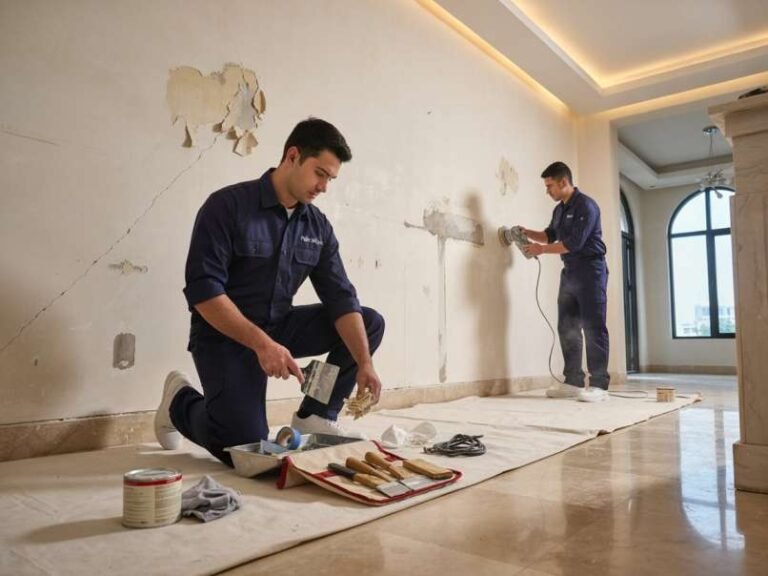
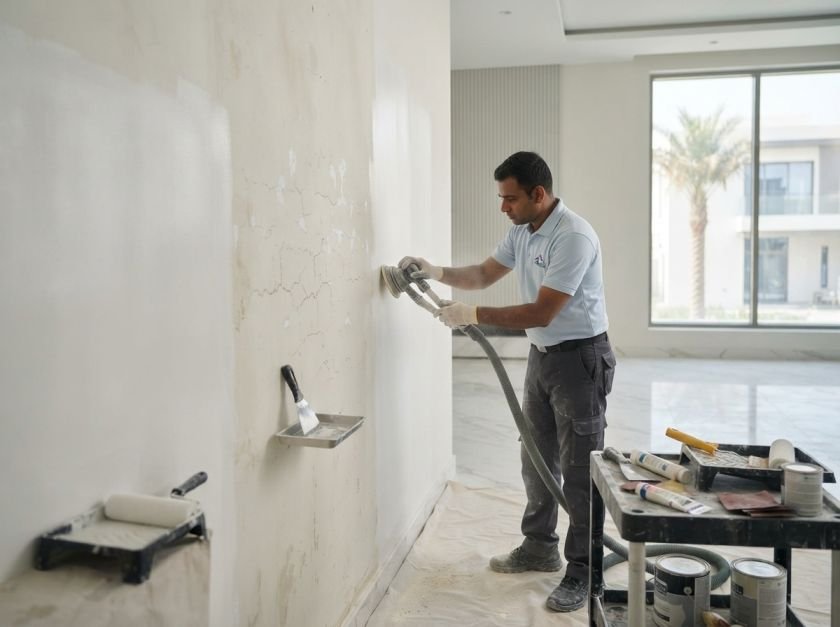
Good paint cannot compensate for a poorly prepared surface. Walls may contain dust, grease, loose paint, small cracks, holes, stains, or uneven areas. If these problems are ignored, the new coating may not bond properly to the surface.
Proper preparation may include cleaning, scraping loose paint, repairing cracks and holes, sanding rough areas, and making sure the surface is dry before painting.
This stage may take more time than the actual application, but it has a major effect on the final appearance and durability of the paint.
Another mistake is assuming that one type of paint can be used throughout the entire villa. Interior walls generally need products that provide a clean appearance, good coverage, and easy maintenance. Depending on the room, washable or moisture-resistant finishes may also be useful.
Exterior walls face much harsher conditions. They need to withstand sunlight, heat, dust, humidity, and weather exposure.
Using products designed for the specific environment can help reduce premature fading, peeling, and surface deterioration.
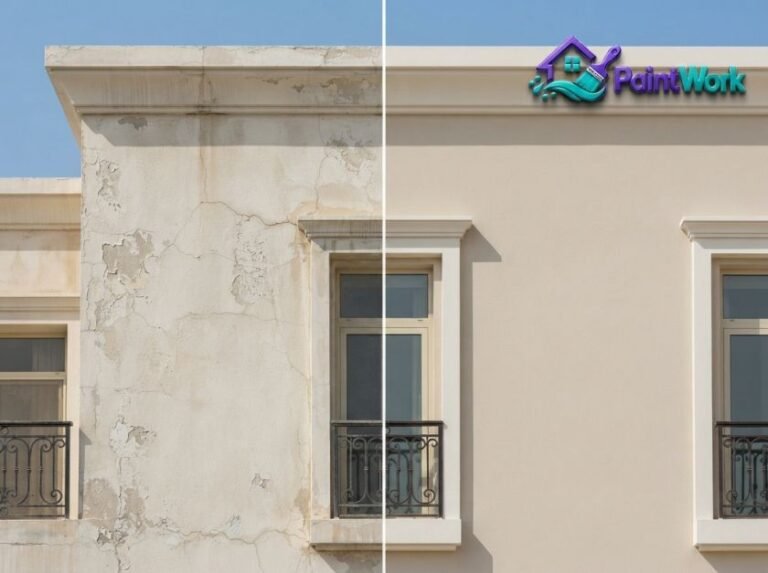
Painting over a damaged wall is one of the easiest ways to create future problems. Cracks may indicate surface movement or other underlying issues. Dampness and water damage can cause stains, bubbling, peeling, mould growth, and poor paint adhesion.
If moisture is present, the source should be identified and addressed before repainting. Similarly, damaged surfaces should be repaired and allowed to dry properly before new coatings are applied. A fresh colour may temporarily hide a problem, but it will not solve the cause of the damage.
Colour selection can have a major impact on how a villa looks. A colour that looks attractive on a small sample may appear completely different when applied across a large wall. Natural sunlight, room size, window direction, artificial lighting, furniture, flooring, and surrounding colours can all affect how a shade appears.
For interior spaces, homeowners should consider how much natural light each room receives. Lighter shades can help create an open feeling, while deeper colours can add character when used appropriately.
Exterior colours should also complement the villa’s architecture and surroundings rather than being selected purely because they are currently popular.
Testing samples before committing to a complete painting project can help prevent disappointing results.
Primer is often overlooked because it is not the final visible coating, but it can play an important role in the painting process.
A suitable primer can help improve adhesion, create a more consistent base, and prepare certain surfaces for the finishing coats. It can be particularly useful when dealing with new surfaces, significant colour changes, stains, repaired areas, or surfaces with specific adhesion requirements. However, primer selection should depend on the surface and the type of paint being applied.
Skipping primer when it is required can contribute to uneven coverage and other coating problems. A professional assessment can help determine whether priming is necessary for each area.
Price is naturally an important factor when planning a villa painting project. However, choosing a contractor based only on the cheapest quotation can sometimes lead to higher costs later.
Two quotes may appear similar while covering very different levels of preparation, materials, coats, protection, and finishing work.
Before hiring painters, ask what is included in the quotation. Check whether surface preparation, crack repairs, primer, number of coats, furniture protection, cleanup, and final inspection are included.
Experience and workmanship also matter. A professional team should be able to explain the proposed process and recommend suitable solutions based on the villa’s surfaces and condition.
A little preparation before starting the project can prevent many common painting problems.
Use this simple checklist:
Following these steps can help create a cleaner finish and reduce the chance of premature painting problems.
Some small painting jobs can be manageable for homeowners, but larger villa projects require considerably more preparation, equipment, time, and attention to detail.
Professional help can be especially useful when you are repainting an entire villa, dealing with damaged walls, working on large exterior surfaces, or trying to achieve a consistent finish throughout multiple rooms.
Experienced painters can inspect the existing surfaces, identify preparation requirements, recommend suitable products, and apply the paint using the correct techniques.
If you are planning a complete villa makeover or repainting project, you can explore Villa Painting Services in Dubai from PaintWork to learn more about professional painting solutions.
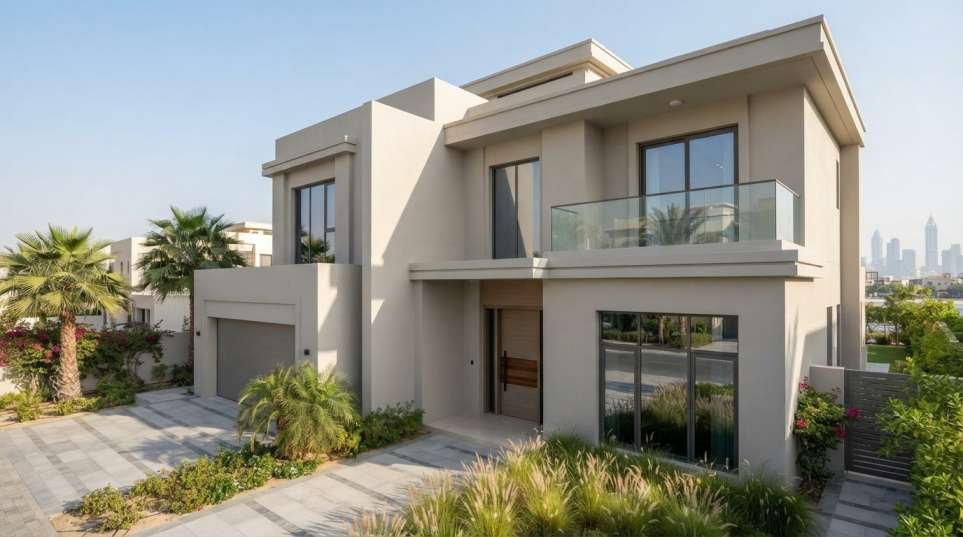
Avoiding common villa painting mistakes can make a significant difference to the appearance and durability of your home. Problems such as poor surface preparation, unsuitable paint, untreated moisture, incorrect primer use, and rushed colour selection can affect the final result.
A successful painting project starts before the first coat is applied. Inspecting the surfaces, repairing existing problems, choosing suitable materials, and using proper application techniques can help you achieve a cleaner and longer-lasting finish.
For larger villa projects, working with experienced professionals can also make the process easier and more reliable. With the right preparation and planning, your villa can have a fresh finish that looks good and performs well in Dubai’s demanding conditions